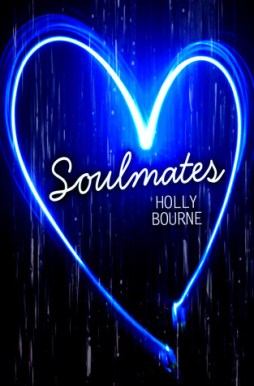
Book Review: Soulmates by Holly Bourne

16099393Soulmates by Holly Bourne

Genre: Young Adult, Contemporary, Romance

Publishing Info: 2013 by Usbourne (kindle edition)

Pages: 548

Star Rating: 3/5

Back Cover Summary:

Every so often, two people are born who are the perfect match for each other. Soulmates. But while the odds of this happening are about as likely as being struck by lightning, when these people do meet and fall in love, thunderstorms, lightning strikes and lashings of rain are only the beginning of their problems. After a chance meeting at a local band night, Poppy and Noah find themselves swept up in a whirlwind romance unlike anything they’ve ever experienced before. But with a secret international agency preparing to separate them and a trail of destruction rumbling in their wake, they are left with an impossible choice between the end of the world, or a life without love…


This book takes the popular cliché of soulmates and puts an interesting spin on it. It was interesting to see a different side to the idea, but although the concept was good, the story was a little weak. One thing I did like was that it was set in the UK, as most YA books are set in the US. This made a nice change for me since I’m from the UK.

It was very slow in places and fairly predictable. There were points where I found myself getting bored but decided to persist to find out what would happen in the end. Some scenes dragged too much. A lot of the book was orientated towards building the characters and showing their relationships to each other, which was done well, but there was just too much of it. The characters were likeable and well rounded, but the lack of plot and conflict dragged the book down.

The last quarter picked up the pace but then it lost me again with such long explanations about the science behind soulmates. It wasn’t that it was overly scientific, Bourne did a good job of explaining it, but it was just too drawn out for me and my interest dwindled. The emotions were written very well in the last section of the book, and it was heart wrenching to read at times. The ending was one of the strongest parts for me. It didn’t fall into the formula of typical endings and provided a sad, but more realistic, ending than many books.

I didn’t dislike it, but it’s just one of those books that isn’t very memorable.
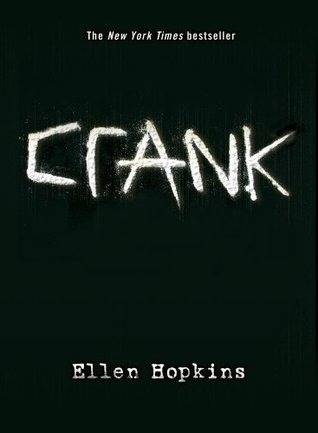
Book Review: Crank by Ellen Hopkins

7095108

Crank by Ellen Hopkins

Genre: Young Adult, Contemporary, Poetry

Publishing Info: 2010 by Margaret McElderry Books (first published 2004)

Pages: 537

Star Rating: 4/5

Back Cover Summary:

Kristina is the perfect daughter: gifted high school junior, quiet, never any trouble. Then she meets the monster: crank. And what begins as a wild ride turns into a struggle for her mind, her soul–her life.

Ellen Hopkins, whom mediabistro.com has called “the bestselling living poet in the country,” exploded onto the young adult scene with her first novel, Crank, which has become a national bestseller. School Library Journal acclaims Crank as “a stunning portrayal of a teen’s loss of direction and realistically uncertain future.” Publishers Weekly raves, “[Hopkins] creates a world nearly as consuming and disturbing as the titular drug.”

Crank is a transfixing look into the tortured lives of addicts and the people who love them.

Crank is the second book by Ellen Hopkins I have read and, like Impulse, takes the form of the novel in verse, or verse novel. I was pleasantly surprised to have enjoyed the verse novel form when I read Impulse, and was keen to read more by Ellen Hopkins. Once again Hopkins tackles a serious issue head on. While Impulse looked at mental health, Crank follows its protagonist through drug addiction.

I don’t know much about drug addiction and have never read a book about it, so I found Hopkins’s blatant and open address of the issue difficult to read but enlightening. The verse novel form particularly suits the subject matter in this case, and Hopkins uses the verse brilliantly, fully capitalising on its potential. The poems are written in erratic stanzas that range across the page, with some of the verse in ‘normal’ stanzas and some spread across the page, others formed in shapes, and many other myriad and interesting styles. This reflects the erratic Kristina and the highs and lows of her addiction.

The other characters were fairly typical and flat as they weren’t given the time to become well rounded characters. However, I didn’t feel this was as big an issue as it would be in other books since the focus of the story is very much on Kristina’s internal conflict with her addiction. The plot was also fairly predictable in places, with some eye rolling on my part at some points which appeared to be presented as ‘twists’ but which weren’t all that surprising. Yet, as with my previous point, it didn’t really matter that much to me because it’s more of a character and emotion driven story that a plot focused novel.

The book was well paced and being told in verse didn’t hinder it carrying a strong narrative. However, the ending felt quite rushed compared. The last several poems summarised the end of the story too much, meaning it lost the emotional impact it had carried in the rest of the book.

Book Review: Twilight by Stephenie Meyer

twilight-meyer

Twilight by Stephenie Meyer

Genre: Young Adult, Paranormal, Romance

Publishing Info: 2009 by Atom (first published 2006)

Pages: 434

Star Rating: 2/5

Back Cover Summary:

When Isabella Swan moves to the gloomy town of Forks and meets the mysterious, alluring Edward Cullen, her life takes a thrilling and terrifying turn. With his porcelain skin, golden eyes, mesmerizing voice, and supernatural gifts, Edward is both irresistible and impenetrable. Up until now, he has managed to keep his true identity hidden, but Bella is determined to uncover his dark secret. What Bella doesn’t realize is that the closer she gets to him, the more she is putting herself and those around her at risk. And it might be too late to turn back …

It’s probably clear from the 2 star rating that I didn’t particularly like this book. As I said in my previous blog post, I’m reading Twilight for the first time, as it’s on the reading list for my degree. I’ve seen and disliked the films, and I’ve heard so many mixed opinions about this book that in many ways I didn’t actually know what to expect. Would I hate it as much as I was anticipating? Or would it be not as bad as expected? I tried to go in with an open mind.

The book actually starts out reasonably well (much to my surprise). Unfortunately it set up an expectation that I might not hate the rest of the book as much as I expected to, but that hope didn’t last all too long. It starts off fairly typically – a girl moves to another town, which she dislikes greatly, and is the new girl in school. Something that’s been done plenty of times before, but although Bella didn’t want to move, it was her choice to, not her parents’ choice. That piqued my curiosity because it seemed to be a contradictory situation and I was interested to know why Bella had made that decision even though she seemed to hate Forks so much. So my initial impression of the book was a reasonably good one. Bella seemed to be an ordinary girl, and not quite as bland as in the films (I think the acting contributed there).

Even when Edward was first introduced I still didn’t mind the book. If I hadn’t seen the films and knew nothing about the story, I probably would have been intrigued to find out more about the mysterious Cullen family. At first, I could understand why Bella was interested in Edward, his peculiar behaviour towards her meant that it made sense for her to be thinking about him and wondering if and why he seemed to hate her and have a physical aversion towards her. Then they get talking and spend a lot of time staring at each other and Bella spends a lot of time thinking about Edward, and I mean yeah she’s a teenage girl with a crush, but she’s constantly thinking about it and it just started to get on my nerves. I still didn’t mind the book too much though. At this point, I didn’t even dislike it yet.

Read More »

Book Review: Dracula by Bram Stoker

9786023

Dracula by Bram Stoker

Genre: Gothic, Classics

Publishing Info: 2011 by Penguin Classics, Hardback Clothbound (first published 1897)

Pages: 454

Star Rating: 4/5

Back Cover Summary:

The vampire novel that started it all, Bram Stoker’s Dracula probes deeply into human identity, sanity, and the dark corners of Victorian sexuality and desire. When Jonathan Harker visits Transylvania to help Count Dracula purchase a London house, he makes horrifying discoveries about his client. Soon afterward, disturbing incidents unfold in England—an unmanned ship is wrecked at Whitby, strange puncture marks appear on a young woman’s neck, and a lunatic asylum inmate raves about the imminent arrival of his “Master”—culminating in a battle of wits between the sinister Count and a determined group of adversaries.

Dracula is a long book, and although my interest in it waned and revived at various points, my overall feeling after finishing it was that I had on the whole enjoyed it. Many a classic has told a lacklustre tale of Victorian families, but throw vampires into the mix and you get an altogether more captivating read. I have the Penguin Classics hardback clothbound edition, which is of lovely quality, with thick and smooth pages.

The novel is written in an epistolary form, using a mixture of diary entries, letters, telegrams and newspaper articles, told from a variety of viewpoints. This is something which not every reader will like. The book is constantly switching between narrators and between the different written pieces (letters, diaries etc.), something which I had expected to dislike. However, because it moved around a lot between different characters, and so different stories (until the various threads become intertwined later in the book), I think that prevented me from becoming bored with it. Often when narrators switch too often it feels disjointed, but this format works for this book, as the patchwork of letters and journal entries is itself an element of the plot.

All was going well, until the latter half of the book when the male characters began to emphasise ridiculously one of the female characters ‘femaleness’ and how they didn’t want her to witness the terrible, vampire-y things going on. This went on quite persistently in ridiculous volume for a couple of chapters. Now, obviously women were viewed by society in a particular way in the Victorian period, so this isn’t exactly surprising. It was how much it was emphasised through the repetitiveness with which the male characters discussed her sensitive disposition as a woman and other such phrases. It became very irritating and made me frustrated at the book, which up to that point I had been mildly enjoying. At least she proved herself to be intelligent and resourceful, despite their attitudes towards her.

The concluding section of the book when the chase of Dracula commences was exciting and kept my attention, making me want to read to the end to discover the fates of the characters. So despite some moments that dragged and my attention wavered, and the section where the woman was treated as weak, the rest of it was actually pretty good. My conclusion upon closing the cover was that I was glad to have read it. Vampires are such a prolific part of our culture, and there have been so many varied adaptations and interpretations of Dracula, that it was interesting to read the original story.

Book Review: The Woman in Black by Susan Hill

584843

The Woman in Black by Susan Hill

Genre: Gothic, Horror, Historical, Mystery

Publishing Info: 1998 by Vintage (first published 1983)

Pages: 200

Star Rating: 3/5

Back Cover Summary:

Arthur Kipps, a junior solicitor in London, is summoned to Crythin Gifford to attend the funeral of Mrs Alice Drablow, and to sort through her papers before returning to London. It is here that Kipps first sees the woman in black and begins to gain an impression of the mystery surrounding her. From the funeral he travels to Eel Marsh House and sees the woman again; he also hears the terrifying sounds on the marsh.

Despite Kipps’s experiences he resolves to spend the night at the house and fulfil his professional duty. It is this night at Eel Marsh House that contains the greatest horror for Kipps. Kipps later discovers the reasons behind the hauntings at Eel Marsh House. The book ends with the woman in black exacting a final, terrible revenge.

I’m not usually one for reading in the horror genre, but this was more of a Gothic ghost story so I didn’t mind reading it. The book is short which I think helped with its readability. If it had been longer I probably wouldn’t have been so interested in wading through it, but since it was only short I figured it wouldn’t take long for me to read it. I read it over a few days but could have easily read it in one sitting, not only because of its short length but also its easy to read style.

The plot is simple – there’s a house in an eerie marsh and it’s haunted. I did like the mystery element to the story when Arthur Kipps was trying to work out what had happened at the house and why the woman in black was haunting it. It was the story of the dead characters that was most interesting, while the characters who were actually living were for the most part a little flat.

Although I enjoyed it I wasn’t totally gripped, which is what you really want from a ghost story. The settings were suitably spooky and there was something unsettling in the way the woman in black wasn’t a see-through ghost like you’d imagine, but was more real and therefore creepier. There weren’t actually many ghostly bits set in the house though. Kipps actually spent a lot of time in the village near the house and more suspense could have been used in those scenes to keep my interest more.

I thought the ending brought the whole thing together and gave the book more weight. I had thought it was going to be a really dull ending but then the twist gave it a dark ending which was more sinister and satisfactory than I was expecting.

Accessible Classics

If you want to get into the classics but you go into a bookshop and are horrified by the thought of attempting to get into Dickens or War and Peace, these are some good books to start with. There are plenty of classics that aren’t too daunting, but here are a few suggestions from a mixture of time periods and genres.

4d4918fd2f57d4832a5f3ee971632994

 ‘Older’ Classics:

Jane Austen – This isn’t everyone’s cup of tea, but if you like a good period drama, it might be worth giving an Austen novel a go. Pride and Prejudice is probably the most famous, but there are also Sense and Sensibility, Northanger Abbey, Emma, Persuasion and Mansfield Park.

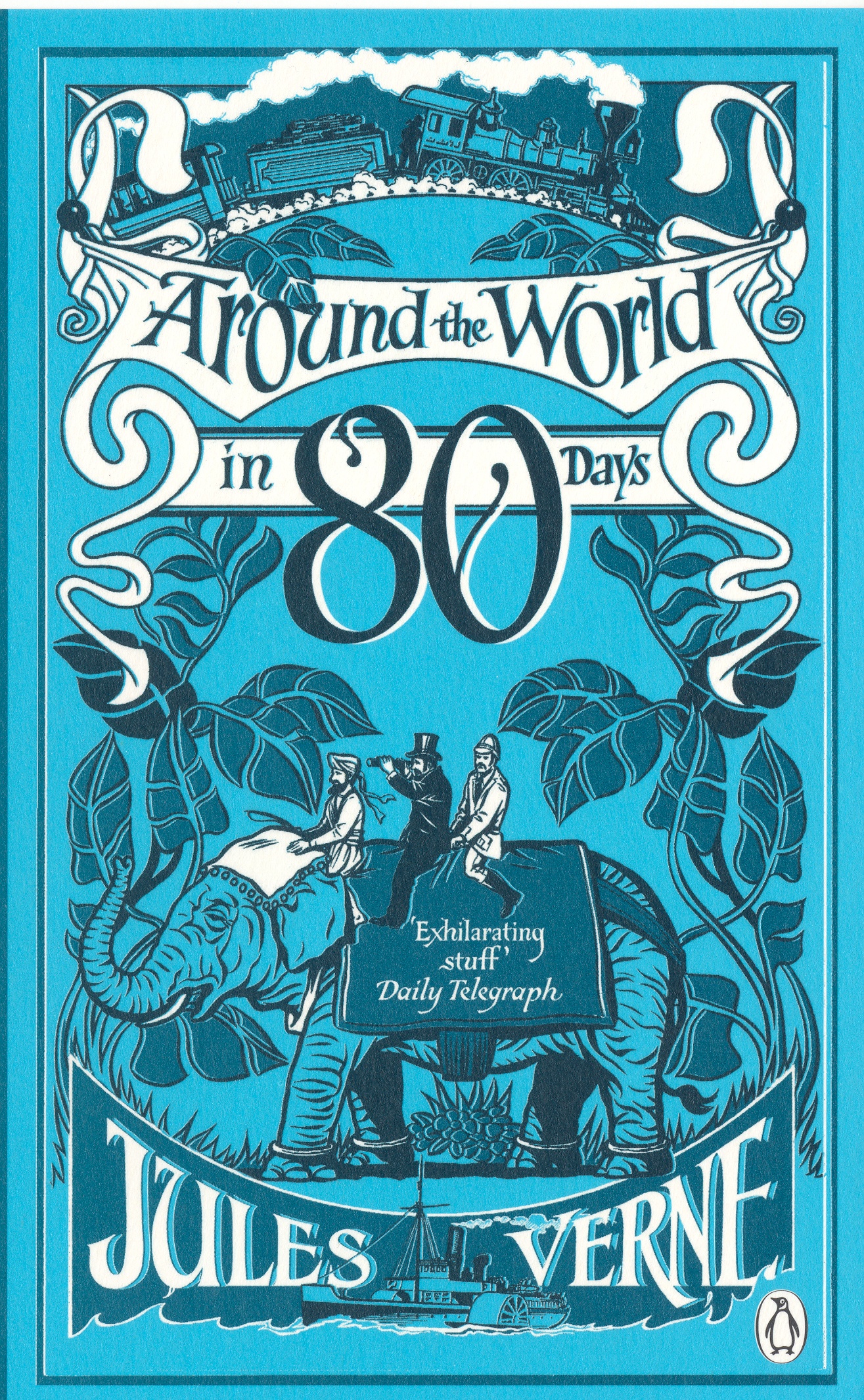
Around the World in Eighty Days – Don’t go into it expecting it to be like the Jackie Chan film which, while keeping the basic plot, embellished it rather dramatically.

527444

Gothic Fiction:

Frankenstein – The ‘myth’ of Frankenstein’s monster has changed and developed so much over the years that most people don’t know the original story. It is a surprisingly easy read.

The Strange Case of Dr Jekyll and Mr Hyde – I didn’t realise how short this is before I purchased it, at around 70 pages.

parody-book-cover-of-the-002

20th Century Classics:

Alice’s Adventures in Wonderland – You may have read this as a child, but if you haven’t it isn’t too late to delve into the imaginative and quirky world of Lewis Carrol.

The Bell Jar – Probably the most famous novel on depression and an incredibly important book in the history of mental illness in literature.

bdea5c13123beb8f6cff2d76abfef9ad

Detective Fiction:

Arthur Conan Doyle – Sherlock Holmes is the most famous detective around. Doyle wrote four novels and many short stories centred on the famous detective. These books are very easy to read and the mystery keeps you hooked. The published order of his novels are: A Study in Scarlet, The Sign of Four, The Hound of the Baskervilles, and The Valley of Fear.

Agatha Christie – Some of the best are considered The Murder of Roger Ackroyd, And Then There Were None, Murder on the Orient Express, and The ABC Murders, but there are plenty of them to choose from.

fahrenheit-451-c

Science Fiction:

Fahrenheit 451 – This novel imagines a world in which books are burnt and although not as well-known as 1984, is a captivating and thought-provoking read.

Animal Farm – A political and satirical novella, this is a must read if you are interested in the classic science fiction genre.

(other science-fiction choices: 1984, Brave New World, Flowers for Algernon)

Book Review: Northern Lights by Philip Pullman

408e2356-919c-43f7-81e6-4a3b2baa3e0e

Northern Lights by Philip Pullman 

Genre: Children’s/Young Adult, Fantasy

Publishing Info: 1998 by Scholastic Point (first published 1995)

Pages: 399

Star Rating: 4/5

Back Cover Summary:

When Lyra’s friend Roger disappears, she and her dæmon, Pantalaimon, determine to find him.

The ensuing quest leads them to the bleak splendour of the North, where armoured bears rule the ice and witch-queens fly through the frozen skies – and where a team of scientists is conducting experiments too horrible to be spoken about.

Lyra overcomes these strange terrors, only to find something yet more perilous waiting for her – something with consequences which may even reach beyond the Northern Lights…

It’s taken me a while to get around to reading this well-known first book in the His Dark Materials series. I thought it was about time. I’ve seen the film a couple of times but not for a few years, and I’ve decided I don’t like reading books after I’ve seen a film adaptation. The film is really different in many ways, but a lot of it is similar to the books. I feel that it just ruins the element of surprise because you know some of what is going to happen. The bit of the book I found most exciting was the end section, probably because they didn’t include that in the film so I didn’t know what would happen, and the twists were actually a surprise.

There seemed to be quite a bit at the beginning at Jordan College, before she actually left. Having seen the film I knew the plot was going to get interesting, but if I hadn’t known that I’m not sure the beginning few chapters would have pulled me in when I was the target age of the book. It just took a while to get going, and there were points throughout the book that were a bit slow.

I liked Lyra as a main character, she had a really strong personality and I wanted to follow her story, but there were few others that really stood out or were interesting. Iorek and Iofur were good characters. Roger was very bland and lacking in personality, like the author couldn’t be bothered to make him a proper character. What I did like was that the boundary between ‘good’ and ‘evil’ characters was blurred.

Plot-wise the story kept me engaged and the world building is also engaging. It was imaginative, with lots of little details that made it seem like a real place. It deals with quite complex themes and issues in places, which I expect will develop as the series progresses.

I’ve heard that the next two books are quite different to the first one, and maybe not everyone’s cup of tea, but Northern Lights pulled me into the story enough to want to read the next books at some point in the future.

Book Review: The Female Man by Joanna Russ

61qwfptuypl-_sx325_bo1204203200_

The Female Man by Joanna Russ

Genre: Science Fiction

Publishing Info: 2010 by Gollancz (first published 1975)

Pages: 207

Star Rating: 3/5

Back Cover Summary:

Living in an altered past that never saw the end of the Great Depression, Jeannine, a librarian, is waiting to be married. Joanna lives in a different version of reality: she’s a 1970s feminist trying to succeed in a man’s world. Janet is from Whileaway, a utopian earth where only women exist. And Jael is a warrior with steel teeth and catlike retractable claws, from an earth with separate-and warring-female and male societies. When these four women meet, the results are startling, outrageous, and subversive.

The idea for this book is brilliant, but I was too confused all the way through to be able to really enjoy it. I liked the concept of exploring the restricted lives of women through parallel universes. What’s amazing to me is that this book was published in 1975, and some of the issues women face in the book are still around today.

It’s very imaginative and the parallel worlds are unique and captured my attention. The world building is creative for the two parallel worlds that are vastly different from Earth. Whileaway is clear, but the two worlds that are very similar to our Earth were a bit confusing. I wasn’t really sure at all times exactly which version of Earth they were on. There are some really vivid images throughout the book, so that I could imagine these unusual alternative universes.

From the start I was confused. I couldn’t figure out who the first person narrator was. At some points I thought it might have changed to another character but I didn’t really have a clue. It also doesn’t help that all four characters have names beginning with J, though that is because they are parallel versions of the same person, it just added to the confusion.

Read More »

Book Review: The Sky is Everywhere by Jandy Nelson

9781406354386

The Sky is Everywhere by Jandy Nelson

Genre: Young Adult, Contemporary, Romance

Publishing Info: Walker Books (first published 2010)

Pages: 320

Star Rating: 3.5/5

Back Cover Summary:

Seventeen-year-old Lennie Walker, bookworm and band geek, plays second clarinet and spends her time tucked safely and happily in the shadow of her fiery older sister, Bailey. But when Bailey dies abruptly, Lennie is catapulted to center stage of her own life – and, despite her nonexistent history with boys, suddenly finds herself struggling to balance two. Toby was Bailey’s boyfriend; his grief mirrors Lennie’s own. Joe is the new boy in town, a transplant from Paris whose nearly magical grin is matched only by his musical talent. For Lennie, they’re the sun and the moon; one boy takes her out of her sorrow, the other comforts her in it. But just like their celestial counterparts, they can’t collide without the whole wide world exploding.

This remarkable debut is perfect for fans of Sarah Dessen, Deb Caletti, and Francesca Lia Block. Just as much a celebration of love as it is a portrait of loss, Lennie’s struggle to sort her own melody out of the noise around her is always honest, often hilarious, and ultimately unforgettable.

What first attracted me to this book was the many poems spaced throughout the book, which are designed to look like they’re written in Lennie’s handwriting on an assortment of things including crumpled notepad paper and paper cups. I can’t imagine how that would look on an eReader, so I think this is one of those books which is best experienced in paperback.

The poems added an interesting element and created another level for looking into Lennie’s thoughts and feelings. The idea is that Lennie writes these poems on random scraps and they’re dotted around the town. The issue I had was that it randomly says Lennie scribbles a poem on a few occasions in the story, but then the reader isn’t given any insight into why she has written that particular poem, what her thoughts were when she was writing it. It’s flippantly mentioned that she writes the poem, and then that’s it the story moves on. This meant that it felt disconnected. It contrasted with the high level of access the reader gets to Lennie’s thoughts through the whole narrative and just seemed odd that her thoughts just disappear whenever she writes a poem. It just felt strange to read and inconsistent.

The book kept me reading and I found Lennie’s narration charming and at times humorous, as well as her quirky family putting a smile on my face. Grief, I think, as a major part of the book was portrayed well. I could feel Lennie’s emotions and the metaphors Nelson used meant I could really put myself in Lennie’s position and understand her grief. Everyone copes with grief in different ways, and I think this was shown well through the members of Lennie’s family.

Read More »

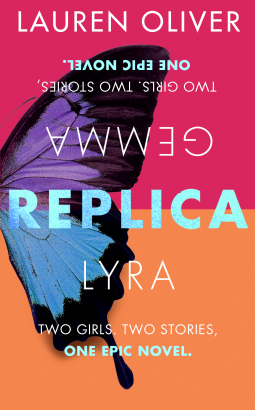
Book Review: Replica by Lauren Oliver

cover93280-medium

Replica by Lauren Oliver

Genre: Young Adult, Science Fiction

Publishing Info: 2016 by Hodder & Stoughton

Pages: 520

Star Rating: 4/5

Back Cover Summary:

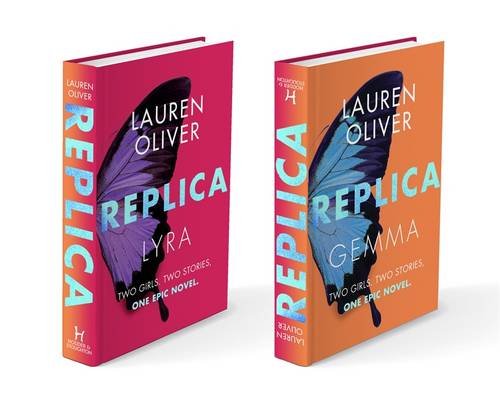
From Lauren Oliver, New York Times bestselling author of Before I Fall and the Delirium trilogy, comes an epic, masterful novel that explores issues of individuality, identity, and humanity. Replica is a “flip book” that contains two narratives in one, and it is the first in a duology. Turn the book one way and read Lyra’s story; turn the book over and upside down and read Gemma’s story. The stories can be read separately, one after the other, or in alternating chapters. The two distinct parts of this astonishing novel combine to produce an unforgettable journey. Even the innovative book jacket mirrors and extends the reading experience.

Lyra’s story begins in the Haven Institute, a building tucked away on a private island off the coast of Florida that from a distance looks serene and even beautiful. But up close the locked doors, military guards, and biohazard suits tell a different story. In truth, Haven is a clandestine research facility where thousands of replicas, or human models, are born, raised, and observed. When a surprise attack is launched on Haven, two of its young experimental subjects—Lyra, or 24, and the boy known only as 72—manage to escape.

Gemma has been in and out of hospitals for as long as she can remember. A lonely teen, her life is circumscribed by home, school, and her best friend, April. But after she is nearly abducted by a stranger claiming to know her, Gemma starts to investigate her family’s past and discovers her father’s mysterious connection to the secretive Haven research facility. Hungry for answers, she travels to Florida, only to stumble upon two replicas and a completely new set of questions.

While the stories of Lyra and Gemma mirror each other, each contains breathtaking revelations critically important to the other story. Replica is an ambitious, thought-provoking masterwork.

51yr30oxbwl

As soon as I heard about Replica I knew I had to read it. Having the book told in two halves in a ‘flip book’ format sounded so original and interesting. I wanted to find out whether Lauren Oliver manages to pull off the concept. I read the book one story after the other, starting with Lyra’s. It’s interesting that you can read the book this way, or starting with Gemma’s story, or with alternating chapters (though that would require a lot of back and forth turning over of the book). One of my concerns was that it would be repetitive, having the same story told twice from two narrators, but there are actually only a few scenes that overlap between the stories so this isn’t a problem.

Read More »